
Automotive & Vehicle Display Modules — −30 °C Wide Temperature | RONEN
Cabins, EV chargers and off-highway machines see −30 °C cold starts and direct sun. All 25 modules below are rated for −30 °C operation with 500–1500 cd/m² brightness — the combination vehicle interiors actually need. Sizes run 3.4, 3.5, 4.3, 5.0, 7.0, 8.4, 10.1, 12.1, 15.6, 18.5″ across 320x240–1920x1080 resolutions, with ODM support for bonded touch and custom FPC.
- Operating temperature −30 °C and below across 25 models
- Brightness up to 1500 cd/m² — readable through windshield glare
- Sizes 3.4, 3.5, 4.3, 5.0, 7.0, 8.4, 10.1, 12.1, 15.6, 18.5″ — dashboards, chargers, agri & construction machines
Three Thermal Zones in One Vehicle
“Automotive grade” is not one environment. A cluster, a centre console and a roof display see different temperatures on the same afternoon, and the difference is larger than the difference between two seasons:
| Zone | Parked-heat soak | Cold start | What it means for the panel |
|---|---|---|---|
| Instrument cluster, top of dash | Highest — behind the windscreen, surfaces can pass 85 °C | Coldest — radiates to the sky at night | Both extremes in one part; the backlight derates at the top, the LC responds slowly at the bottom |
| Centre console / infotainment | High but shaded, typically 60–75 °C | Moderate | Touch and reflectance dominate; the panel rarely sees the worst heat |
| Door, seat-back, roof display | Moderate, unless behind glass | Moderate | Vibration and viewing angle dominate; heat is a secondary concern |
The useful discipline is to specify the zone, not the vehicle: a panel chosen for a centre console and then moved to the top of the dash will fail its own temperature specification without anything being wrong with the part.
What −30 °C Really Means at Power-Up
All 25 modules in this range are rated for −30 °C operation, and that rating is about survival and function, not about instant readability. Liquid-crystal viscosity rises steeply as temperature falls; at −30 °C the response time can be ten times the 25 °C figure, which on a cluster means a needle or a warning icon that fades in over a second or two rather than appearing.
If the vehicle must show a warning within a specific time after a cold start, that requirement belongs in the specification as a cold-start response figure, with a heater behind the panel if the physics cannot meet it. It is not something firmware can fix, and it is not covered by a “−30 °C” line on a datasheet.
Sunlight, Reflection and Why Bonding Pays for Itself
A car interior is a light box: a sloping windscreen, a light dashboard and a driver looking down at a screen. An air gap between the cover lens and the panel adds two reflective surfaces inside the stack, and in a sunlit cabin that reads as a grey veil over the image. Optical bonding removes the internal reflections and lets the black stay black, which is why it is standard practice on premium clusters and increasingly on mid-range consoles.
Bonding also changes the failure mode. A bonded stack cannot be reworked at board level; the display becomes an assembly, and the service strategy has to be module replacement. That trade — better optics for a non-serviceable assembly — is worth making deliberately, not by default.
Vibration and the Connector That Fatigue-Fails
Vehicle vibration is specified as a profile, not a single g figure — ISO 16750-3 is the common reference for electrical equipment on vehicles, with different profiles for body, engine and wheel-mounted locations. What fails first in a display is rarely the glass: it is the FPC bond and the board connector, because they carry the mass of the harness through a joint that was designed for static assembly.
Three design measures remove most of the risk: a service loop in the flex so vibration is taken in the loop rather than at the bond, a connector with a locking bar, and a mounting that clamps the frame rather than loading the panel through the bezel. Ask for the vibration profile during selection — a part that passes a generic sine sweep may still fail a random profile with the right resonances.
Where AEC-Q100 Stops and the Display Begins
AEC-Q100 qualifies integrated circuits; there is no equivalent qualification for a liquid-crystal module. A display’s automotive suitability is established by the vehicle maker’s own design-validation and production-validation programme — thermal cycling, thermal shock, damp heat, vibration, mechanical shock, and often a sunshine simulation. What a display supplier contributes to that programme is evidence: material declarations, lot traceability, test reports on the panel and backlight, and a documented change notification process.
That is the honest position, and it is worth being explicit with a procurement team that expects a certificate. A supplier claiming “AEC-Q100 qualified displays” is usually describing the driver IC, not the module.
The Range at a Glance
Twenty-five modules, all rated −30 °C, spanning 320×240 to 1920×1080. The 800×480 group dominates because most vehicle displays show icons and short labels rather than text pages.
| Size | Models | Resolutions in this range | Panel / touch variants | Where it usually goes |
|---|---|---|---|---|
| 3.4″ | 1 | 800×800 | IPS Round 1 | Gauge / cluster auxiliary |
| 3.5″ | 2 | 320×240 | IPS 2 | Compact cluster |
| 4.3″ | 2 | 480×272, 800×480 | IPS 2 | Cluster, HVAC panel |
| 5.0″ | 3 | 800×480 | IPS 3 | Instrument display |
| 7.0″ | 7 | 800×480 | TN 5 / IPS 2 | Cluster, centre console |
| 8.4″ | 1 | 1024×768 | TN 1 | Console display |
| 10.1″ | 4 | 1280×800 | IPS 4 | Centre console |
| 12.1″ | 1 | 1024×768 | IPS 1 | Console, passenger display |
| 15.6″ | 3 | 1920×1080 | IPS 3 | Large console |
| 18.5″ | 1 | 1920×1080 | IPS 1 | Passenger / rear display |
Standard Modules in This Range
25 standard models in this family
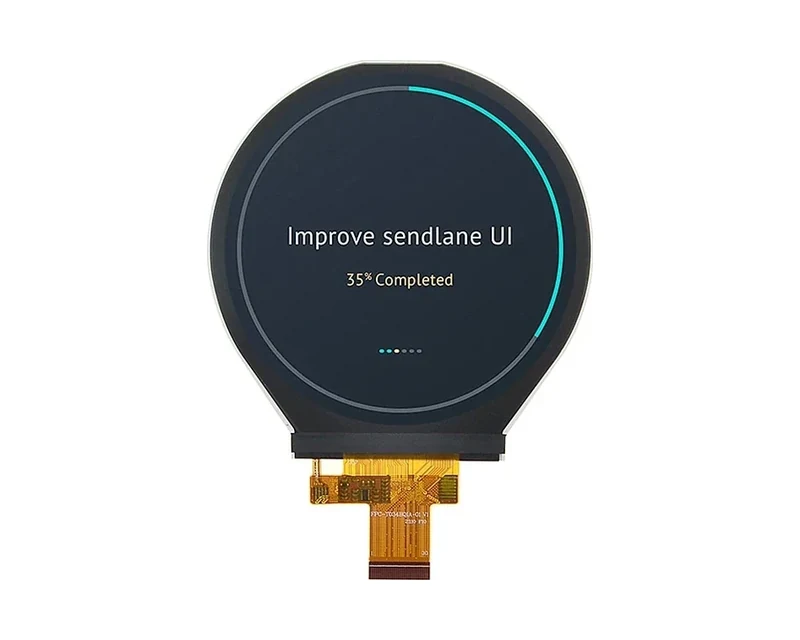
RG-T034BOIA-01
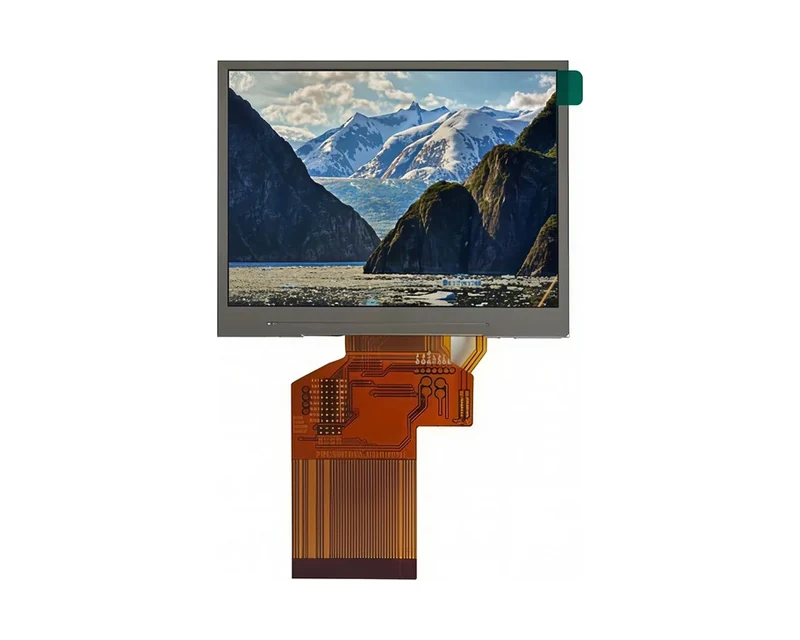
RG-T035HLWSA-01
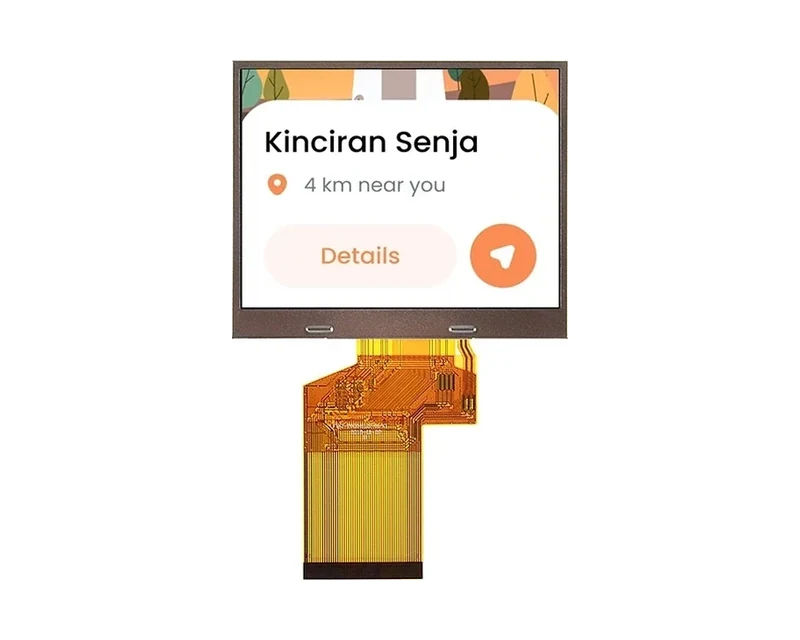
RG-T035HLSWA-01
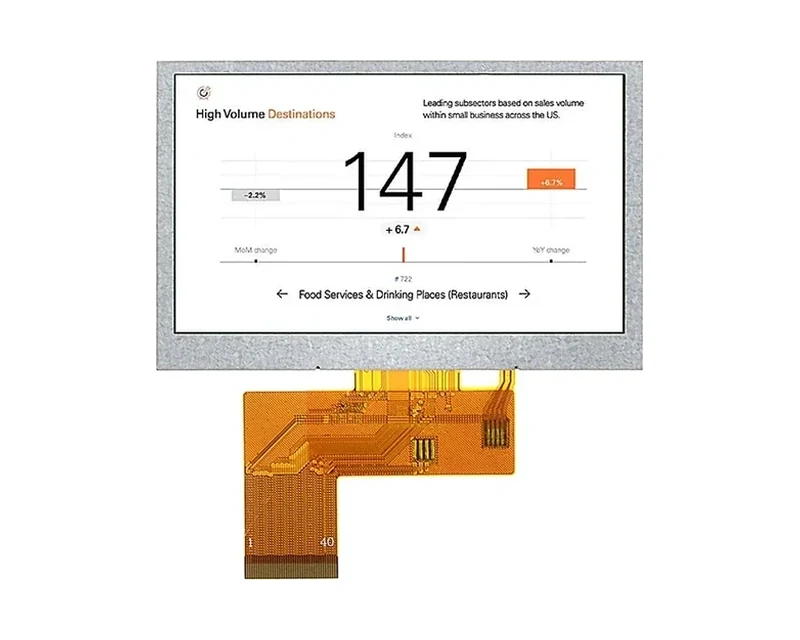
RG-T043BPSWA-02
RG-T043BWSWA-02
RG-T050BWSWA-02

RG-T050BWSWA-02CP

RG-T050BWSWA-02CA
RG-T070QWHW-01
RG-T070QWHW-01CA
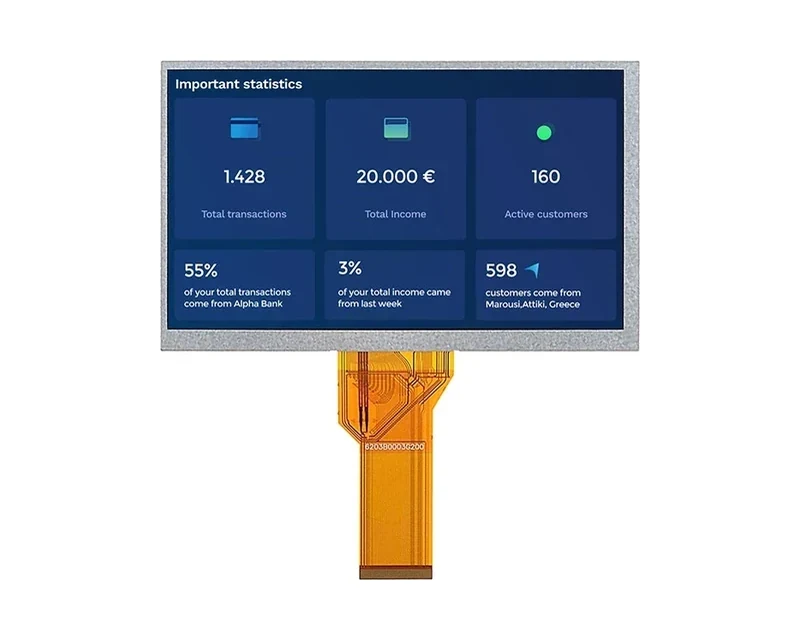
RG-T070QWHW-02
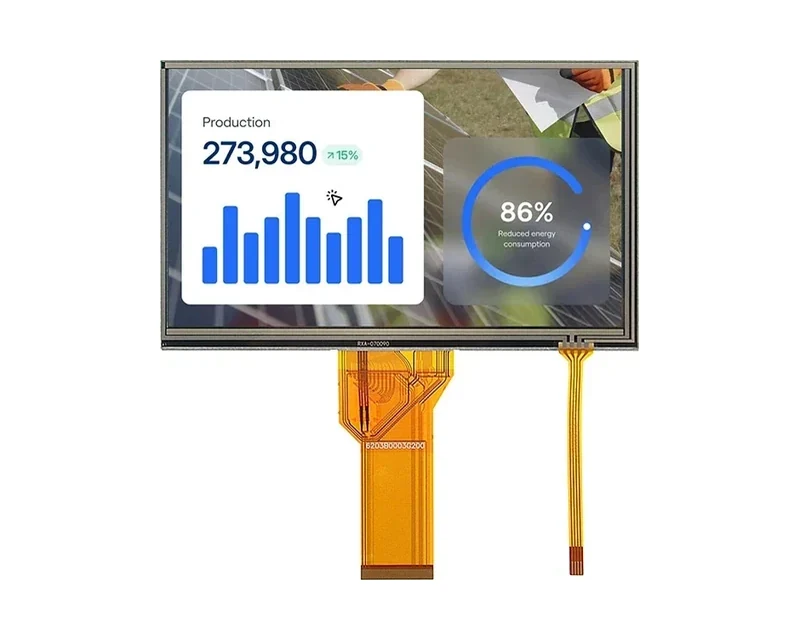
RG-T070QWHW-02P
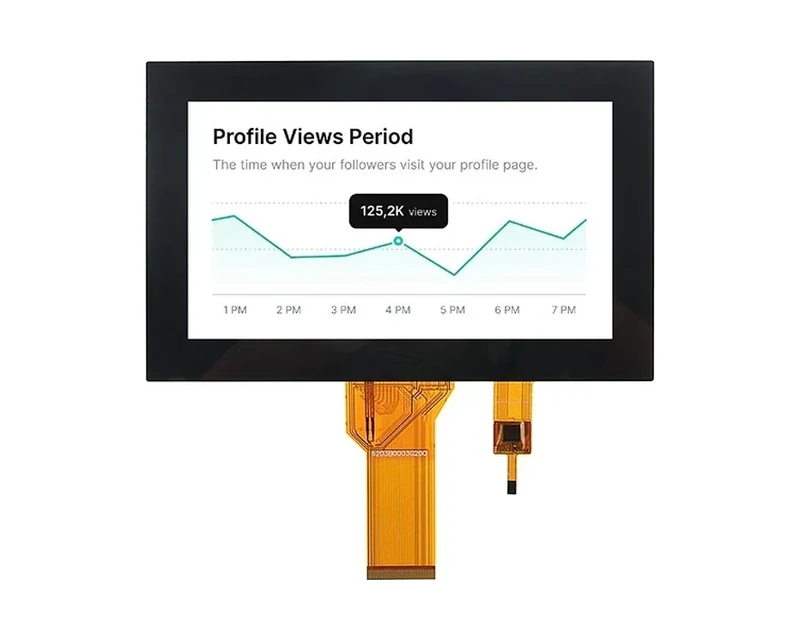
RG-T070QWHW-02CA

RG-T070SWHWA-01

RG-T070SWHWA-02
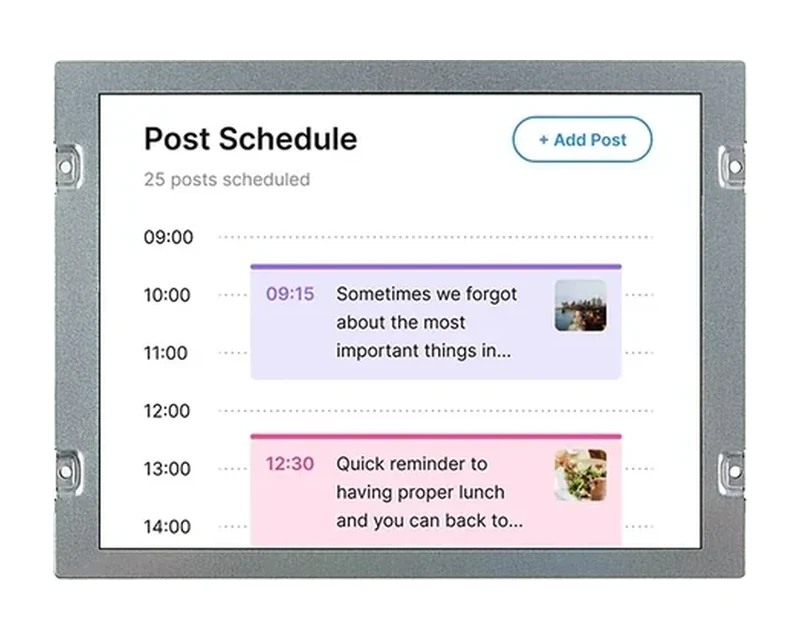
RG-T084BXJWA-01

RG-T101HIEWA-01
RG-T101HIEWA-01CP

RG-T101HIEWA-03
RG-T101HIEWA-04
RG-T121QXHA-02
RG-T156QFHWA-01
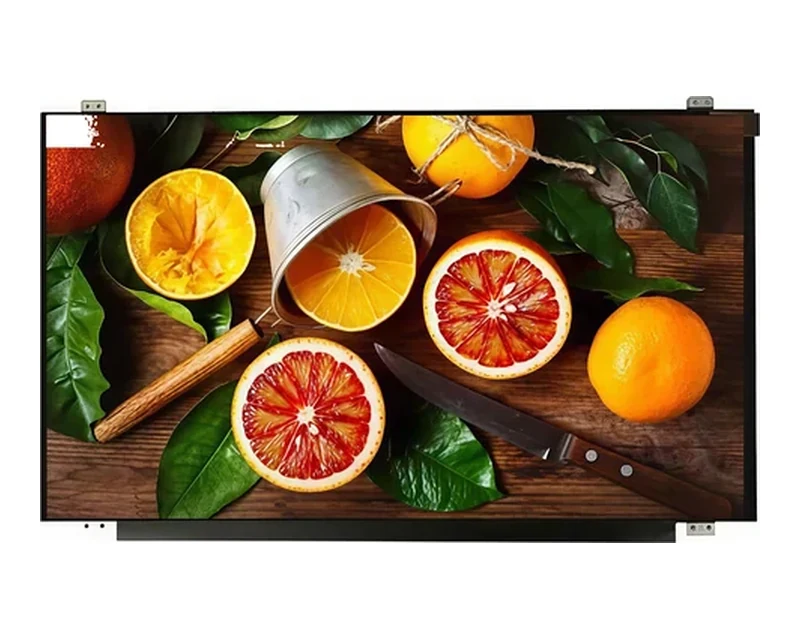
RG-T156BFHWA-02
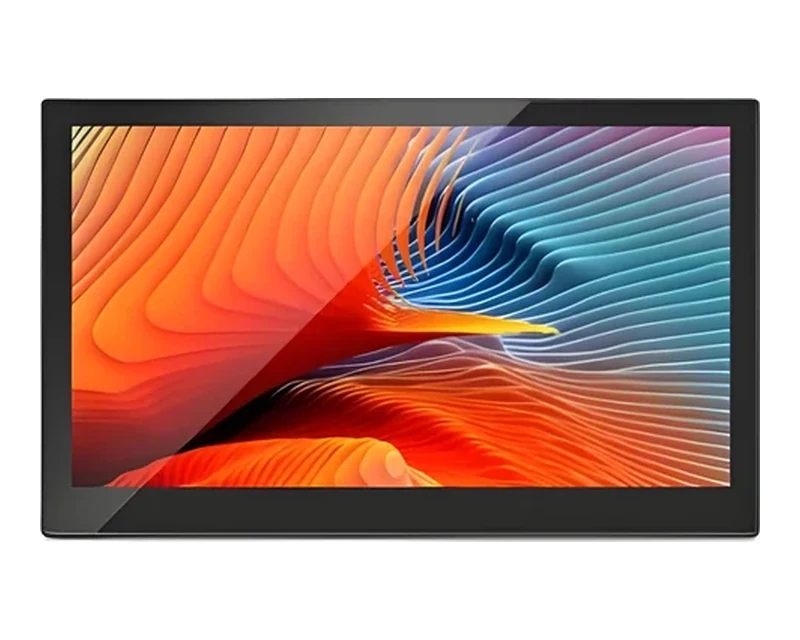
RG-T156BFHWA-02CP
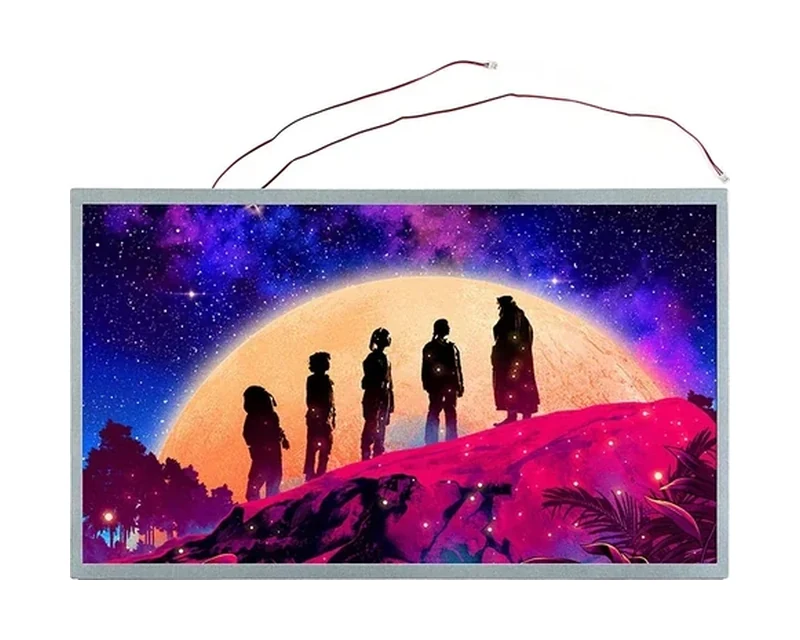
RG-T185BFHWA-02
Can’t find the exact model you need?
This is a standard model, and our online catalog shows only part of what we build. We hold additional models not listed here, and we can adjust brightness, interface, touch or outline within an existing product family, or evaluate a fully custom solution. If this model does not fully match your requirements, please email your specifications to sales@odmlcd.com. We’ll help you identify the right part or assess a custom option.
FAQ
Do wide-temperature modules really operate -30°C to +85°C?
Yes. 33 catalog models are rated for -30°C operation (storage down to -40°C, with the extended range qualified to +85°C / -40~+90°C on request). Each lot ships with temperature-cycle verification, and a third-party high-low temperature cycling report (≥500 cycles, -40~+90°C) is available on request.
See the wide-temperature display line.
Are the modules sunlight readable?
Yes. RONEN offers a high-brightness line up to 1500 nits (23 standard models ≥1000 cd/m²) with optional optical bonding and transflective solutions that keep the image legible under direct sunlight. For outdoor HMI, pair high brightness with a bonded cover lens and anti-glare treatment.
Browse sunlight-readable displays or tell us your ambient-lux target on the contact page.
How do you handle long-term supply and end-of-life (EOL)?
The 190+ standard models are produced continuously rather than project-by-project, backed by our own 35.3M+ pcs/year capacity, so steady multi-year supply is the default. For automotive and medical programs this is reinforced by IATF 16949 (incl. product design, Ch. 8.3) and ISO 13485 certifications.
We operate a PCN / EOL notification process and support last-time-buy planning. Request the formal obsolescence and long-term-supply policy for your program on the contact page.
When an original panel approaches end-of-life, the original module cross-reference index helps locate matching alternatives by size, resolution and interface before a redesign is forced.
Can a standard panel be customized for automotive use?
Often yes: the mechanical outline, interface, brightness, and touch can be matched to the application, with the qualification and traceability built into the request.
Are these modules AEC-Q100 qualified?
No, and no LCD module is: AEC-Q100 is an integrated-circuit qualification. Automotive suitability for a display is established by the vehicle maker’s design and production validation programme, supported by supplier evidence such as material declarations, lot traceability, thermal and vibration test reports, and a change notification process.
What does −30 °C operation guarantee?
That the panel functions within specification at that temperature. It does not guarantee instant readability: LC response time rises steeply in the cold, so an image can take a second or more to settle after a cold start. If the vehicle needs a warning visible within a defined time, specify the cold-start response separately and consider a heater.
Why bond the cover lens instead of using an air gap?
An air gap adds two reflective surfaces inside the optical stack, which in a sunlit cabin shows as a grey veil over the image. Bonding removes those reflections and improves contrast and perceived black. The trade is serviceability: a bonded assembly is replaced as a unit rather than repaired.
How do I specify vibration for a dashboard display?
By profile, not by a single g value. ISO 16750-3 is the usual reference, with different profiles for body, engine and wheel-mounted locations. Send the profile the vehicle programme uses; a panel that survives a generic sine sweep may still resonate under a random profile with the harness attached.
How do you keep the display from being too bright at night?
Dimming range matters more than maximum brightness. A cluster at full output in a dark cabin is a distraction, so the panel and its backlight driver need to reach single-digit cd/m² without colour shift, and the transition should follow the ambient-light sensor smoothly rather than in steps.
How do I choose a zero pixel defect TFT LCD module for automotive displays?
'Zero pixel defect' is a 100% outgoing-inspection acceptance plan, not a lifetime guarantee — write the acceptable ISO 13406-2 pixel-defect class into the procurement specification. For multi-year vehicle programs, pair it with component-level qualification evidence (AEC-Q100 for driver ICs, AEC-Q200 for passive components), lot traceability and a change-notification process, so a rejected lot can be traced and replaced without stopping the line.
What does AEC-Q200 cover that AEC-Q100 does not, on an automotive display module?
The two documents cover different component classes. AEC-Q100 qualifies integrated circuits — the display driver, the timing controller and the touch controller IC. AEC-Q200 qualifies passive components — the capacitors, inductors and resistors on the module's own PCB and on the backlight driver. A display module is therefore not itself 'AEC-Q100 qualified'; it is a sub-assembly that contains components qualified to one or both standards, and the vehicle maker's design and production validation programme establishes the suitability of the assembly as a whole. Ask the supplier which parts of the module carry which qualification and get the evidence per component family.
Do automotive display programmes need PPAP and APQP documentation?
Yes, if you supply into a vehicle programme rather than building prototypes. APQP is the planning framework — the sequence of design and process validation activities agreed before production — and PPAP is the evidence package submitted at the end of it to show the process is capable and repeatable. For a display module the practical deliverables are the control plan, the process FMEA, measurement-system analysis on the inspection fixtures, dimensional and functional test results from the production tooling, and the material and traceability declarations. Confirm with your customer which PPAP submission level applies, because the document set shrinks sharply below level 3.
Which interface suits an automotive display module — LVDS or MIPI DSI?
Both are used, and the choice follows the harness, not the panel. LVDS is the established choice for instrument clusters and centre stacks because low-swing differential pairs survive a metre or more of vehicle harness and stay immune to motor and inverter noise, which is why it dominates 7–21.5″ automotive builds. MIPI DSI carries high resolution over few lanes with low power, but its practical reach is short and it is layout-sensitive, so it suits a panel mounted close to the host board rather than a display on an articulated arm or across the cabin. If the host only exposes one of the two, a bridge IC is usually cheaper than re-spinning the board.
Should an automotive display use PCAP or resistive touch for 24/7 operation with gloves?
Match the touch technology to the operating gesture, then to the duty cycle. Projected capacitive (PCAP) is the default for a modern cockpit: optical clarity, multi-touch and a sealed front glass that survives cleaning. With gloves, a PCAP controller tuned to the glove thickness works, but thick winter or work gloves and any stylus input remain the weak case. Resistive touch reads through any glove and any stylus with modest cost and power, at the price of optical transmission and a flexible top layer that wears under heavy 24/7 use. For round-the-clock operation, specify the actuator and the surface hardness together with the touch type, and test at the temperature extremes rather than at room temperature.
How do I handle EMC and vibration qualification for a dashboard display?
Treat EMC and vibration as assembly-level requirements with component-level evidence. On EMC, the equipment is tested to the vehicle maker's own specification, which typically references CISPR 25 for emissions and ISO 11452 for immunity, with ISO 7637 covering transient conduction on the supply; the display's contribution is the shielding, the grounding of the frame and the filtering on the interface harness, so ask for the interface and grounding recommendations alongside the panel. On vibration, ISO 16750-3 defines the mechanical loads for parts mounted in the vehicle, and the display's own resonant behaviour and the bonding of the cover glass determine whether the stack survives it. Request the vibration and shock test report per model, and keep the qualification responsibility at the assembly level where the standards actually apply.